DevOps promotes strong collaboration between development and operations teams, breaking down silos to improve communication and shared goals. Tools like Slack and Microsoft Teams facilitate real-time discussions, enabling teams to resolve issues quickly and deliver software efficiently.

CI/CD automates the integration and deployment of code changes. Continuous Integration involves merging code into a central repository for automated testing, while Continuous Deployment automatically releases validated code to production, ensuring swift delivery of features and fixes.

IaC allows teams to manage and provision infrastructure through code, automating setup and configuration. This approach ensures consistency, reduces human error, and makes it easier to replicate environments using tools like Terraform and AWS CloudFormation.

Continuous monitoring is crucial for application health, using tools like Prometheus or Datadog to gain insights into performance and availability. This enables quick identification of issues and fosters a culture of feedback for continuous improvement in future projects.

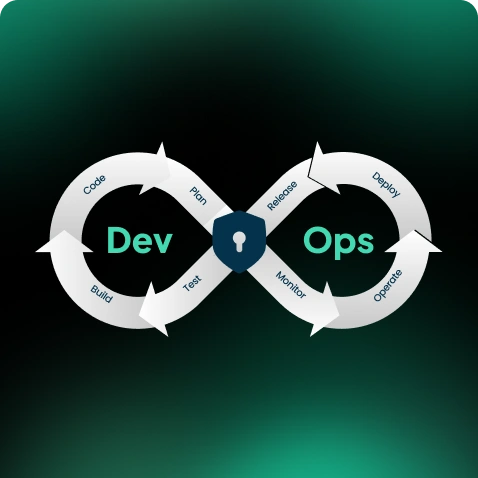
DevOps is a software development methodology that combines software development (Dev) with information technology operations (Ops), which aims to shorten the software development life cycle and provide continuous delivery of high quality software.
By integrating automated practices like Continuous Integration and Continuous Deployment (CI/CD), DevOps enables frequent code changes and faster releases, reducing errors and allowing teams to focus on innovation. Infrastructure as Code (IaC) further streamlines infrastructure management by enabling automation through code, ensuring consistency and scalability.
Our DevOps services span the life cycle of the software and can be used for anything from customer-facing systems, to large-scale enterprise systems.
Our DevOps services span the life cycle of the software and can be used for
anything from customer-facing systems, to large-scale enterprise systems.
Continuous integration (CI) is a DevOps practice where developers frequently merge code into a central repository, triggering automated builds and tests. It helps detect bugs early, improves software quality, and speeds up software release.
One key practice of DevOps is to perform small, but frequent, updates to the software. Updates are usually smaller and more incremental in nature than the larger, less frequent upgrades performed under traditional release practices.
Increased communication and collaboration are key cultural aspects of DevOps. The use of DevOps tooling and automation of the software delivery process establishes collaboration by bringing together the workflows and responsibilities of development and operations.
Bradford, West Yorkshire
info@softwavedevelopment.com

Bradford, West Yorkshire
info@softwavedevelopment.com